What is Energy Arbitrage, and Why It Matters for South African Businesses
    Energy Arbitrage

    What is Energy Arbitrage, and Why It Matters for South African Businesses

    15 September 2025 · Forest Energy

    Back to Blogs & Articles

    Charge during off-peak, discharge during peak. Energy arbitrage transforms how businesses manage electricity costs.

    As electricity prices in South Africa continue to rise and time-of-use (TOU) tariffs become more widespread, the way businesses think about energy is changing. Many have already made the move to solar PV, but as tariffs evolve, solar alone may no longer be enough. This is where battery energy storage systems (BESS) and energy arbitrage come in.

    Energy Arbitrage: A Strategy for South African Businesses

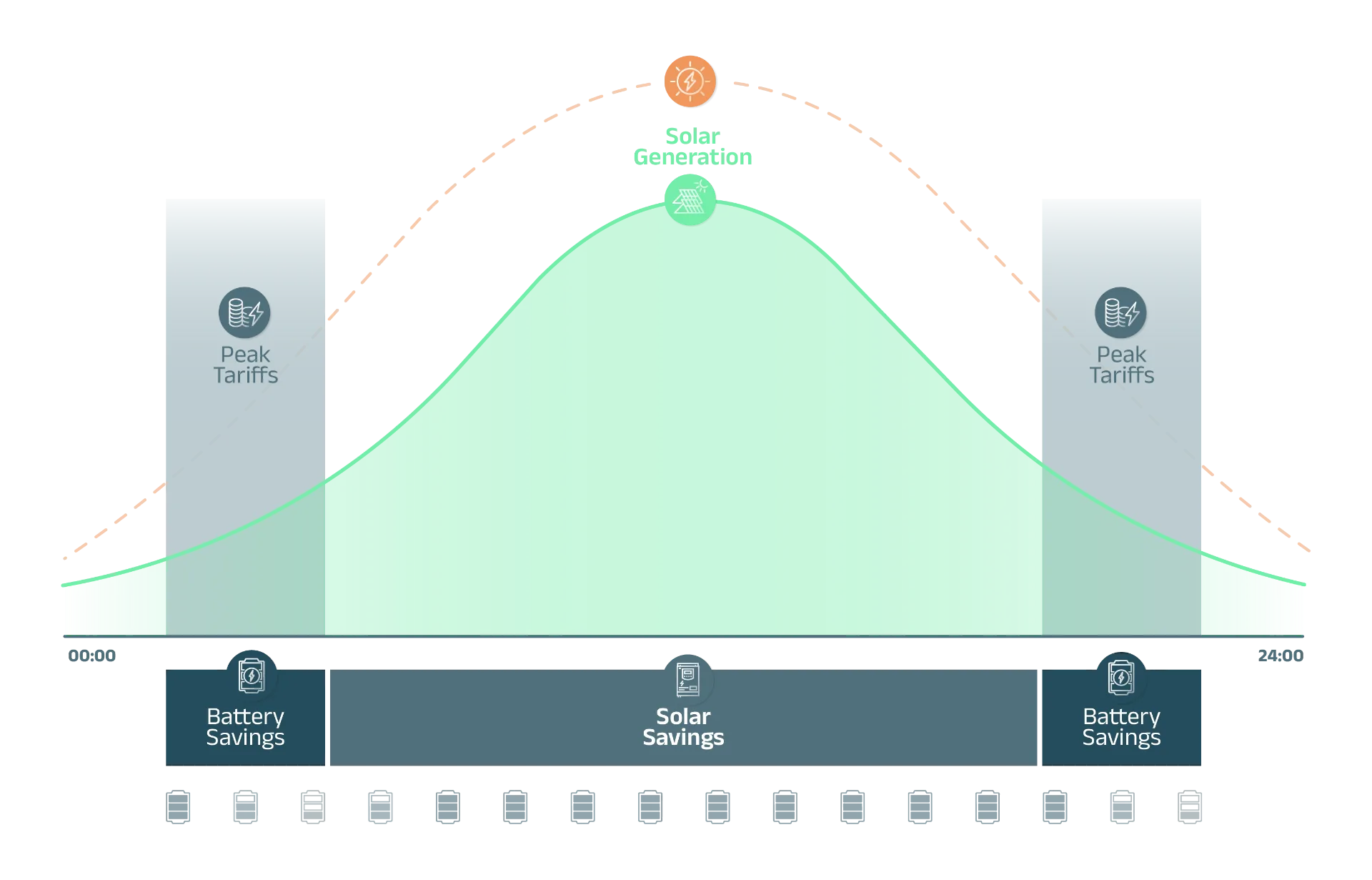
    Energy arbitrage is the process of charging a battery when electricity is cheap and discharging it when electricity is expensive. It allows businesses to shift their energy use away from high-tariff periods without changing how or when they operate.

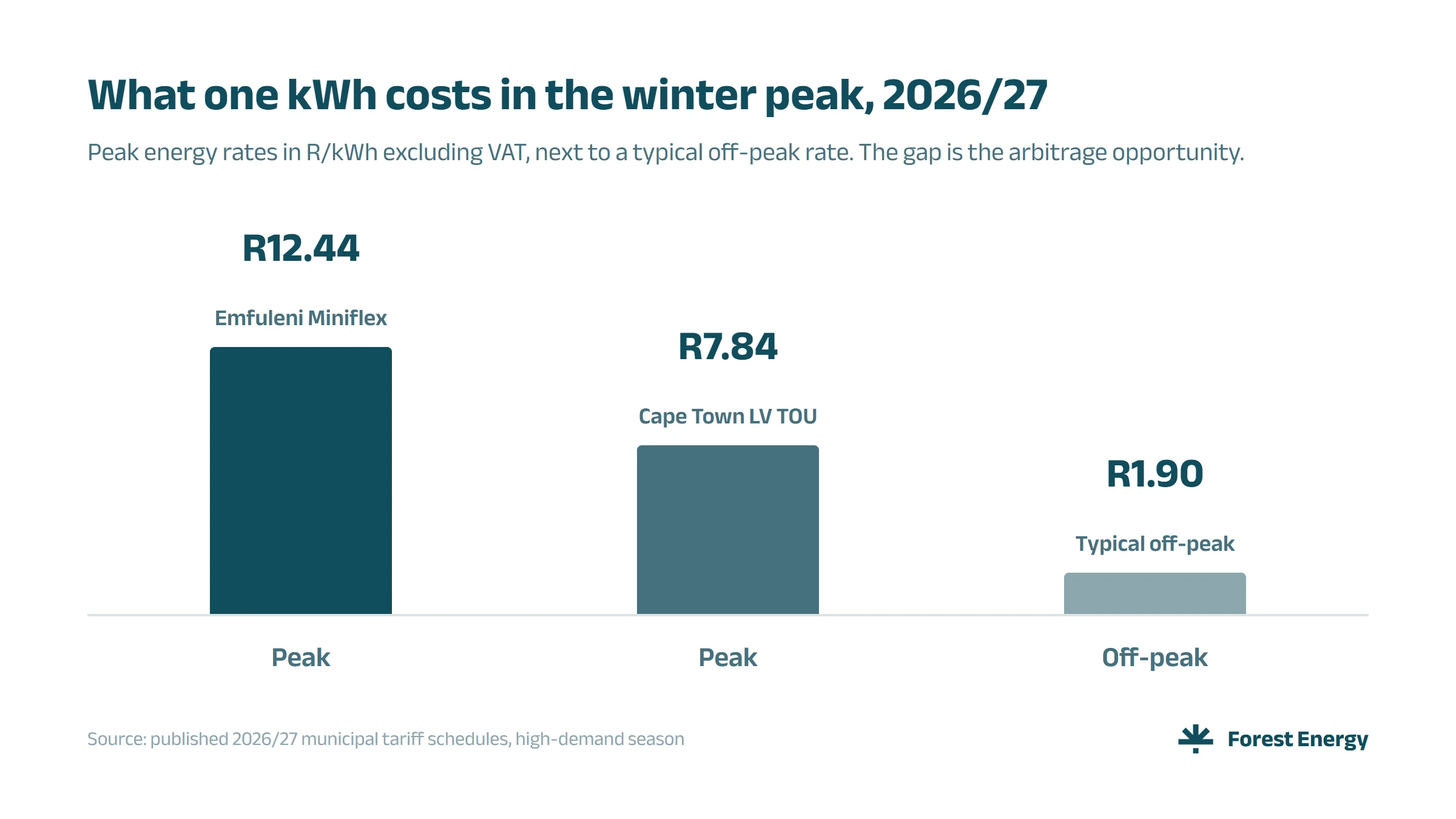
    For example, a business might charge its battery at R1.20/kWh in the morning and discharge it later that day during peak hours, when electricity costs R3.50/kWh. That's a direct saving of R2.30 per kilowatt-hour, achieved simply by timing when stored energy is used.

    While many companies see batteries purely as backup, arbitrage offers daily, repeatable savings that significantly improve ROI. Backup is an insurance policy. Arbitrage is a strategy.

    A Profitable Opportunity

    More municipalities are adopting TOU billing models. With peak rates climbing and off-peak remaining relatively stable, the pricing gap creates an opportunity to use stored energy in a smarter, more profitable way.

    Energy arbitrage is especially effective for businesses with solar PV systems. With a battery in place, excess solar can be stored and used later, boosting the effective value of every kilowatt-hour produced.

    Solar Systems Designed for Arbitrage Performance

    At Forest Energy, we work closely with clients to design systems engineered for arbitrage performance. This involves detailed modelling of your load profile, understanding the tariff you're on, and optimising when and how your system charges and discharges.

    Energy arbitrage is ideal for businesses that:

    • Are on TOU tariffs like Eskom Megaflex, Miniflex, or similar municipal models
    • Have solar systems already installed or plan to install soon
    • Experience high energy usage during late afternoons or evenings
    • Want to reduce daily energy costs, not just secure backup

    How Arbitrage Could Work for Your Business

    Arbitrage transforms battery storage from a passive backup system into an active part of your energy strategy. We offer a free simulation based on your historical electricity data.
    Common questions

    What is energy arbitrage?

    Energy arbitrage is the process of charging a battery when electricity is cheap and discharging it when electricity is expensive. It lets a business shift its energy use away from high-tariff periods without changing how or when it operates.

    How much can a business save with energy arbitrage?

    It depends on the gap between your peak and off-peak rates. As an example, charging a battery at R1.20 per kWh off-peak and discharging it during a R3.50 per kWh peak period saves R2.30 per kWh, simply from timing when stored energy is used.

    Is energy arbitrage different from battery backup?

    Yes. Backup is an insurance policy against outages, used only occasionally. Arbitrage is a daily, repeatable strategy that actively improves the return on a battery investment rather than leaving it idle until it is needed.

    Which businesses benefit most from energy arbitrage?

    Businesses on Time-of-Use tariffs such as Eskom Megaflex or Miniflex, or a similar municipal model, that already have or plan to install solar, and that carry high energy usage into the late afternoon or evening peak.

    Does energy arbitrage work well alongside solar PV?

    Yes. With a battery in place, excess solar generated during the day can be stored and used later, boosting the effective value of every kilowatt-hour a solar system produces.

    How do I know if arbitrage would work for my business?

    Forest Energy offers a free simulation based on your historical electricity data, modelling your load profile and tariff to show whether arbitrage makes financial sense for your specific site.

    Related solution

    GridSolar Boost: Battery Arbitrage

    Shift energy from off-peak to peak periods and maximise your TOU tariff savings.

    Take control of your energy strategy

    Let our engineering team design a tailored solution aligned to your operational needs, cost structure, and long-term growth.