Businesses operating in Ekurhuleni face the most aggressive time-of-use electricity tariffs in South Africa. While other municipalities and Eskom charge premium rates during peak periods, Ekurhuleni peak electricity tariffs create cost differentials so extreme that energy arbitrage stops being an optimisation strategy and becomes a business survival requirement. Without GridSolar Boost, companies in this metro are paying nearly five times more for electricity during peak hours than necessary.
The Ekurhuleni Tariff Reality
City of Ekurhuleni's E LV tariff structure shows rate differentials that dwarf other South African utilities. During high demand season, peak electricity costs R11.43 per kilowatt-hour. Off-peak rates drop to R2.01 per kilowatt-hour. That is a R9.42 per kWh spread between the most expensive and cheapest electricity available from the same utility on the same day.
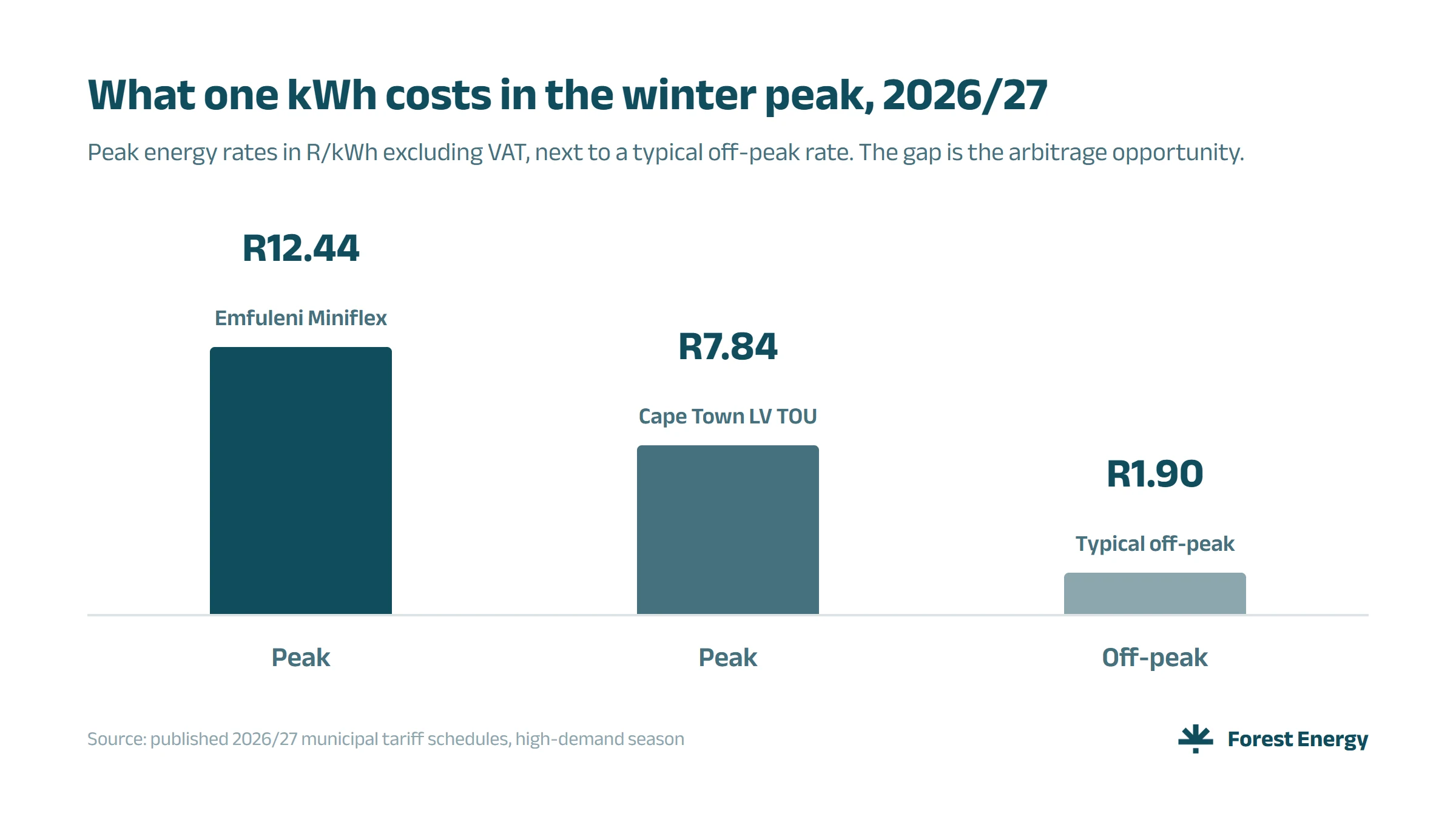
To put this in perspective, Eskom Miniflex peak rates reach R7.05 per kWh with off-peak at R1.18 per kWh for a R5.87 spread. Ekurhuleni's peak rates are 62% higher than Eskom's, while off-peak rates are 70% higher. Standard period rates sit at R3.30 per kWh during high-demand season, creating a R1.29 per kWh arbitrage opportunity even against mid-day consumption.
What This Means for Business Operations
A manufacturing facility in Ekurhuleni consuming 1,000 kWh during morning and evening peak periods pays R11,430 daily in peak electricity charges during the high-demand season. The same 1,000 kWh consumed during off-peak periods costs R2,010. The business is paying an additional R9,420 per day simply because of when they use electricity, not how much they consume.
Over a 20-day working month, that is R188,400 in completely avoidable costs. Annually, a single facility paying peak rates for modest consumption faces over R2.2 million in electricity charges that could be reduced significantly through strategic time-shifting with GridSolar Boost.
GridSolar Boost as Cost Control Infrastructure
In Ekurhuleni, GridSolar Boost stops being a nice-to-have efficiency investment and becomes essential cost control infrastructure. The arbitrage spread is so wide that battery storage delivers some of the fastest payback periods in South Africa. Every kilowatt-hour shifted from peak to off-peak consumption captures the extreme rate differential during the high-demand season.
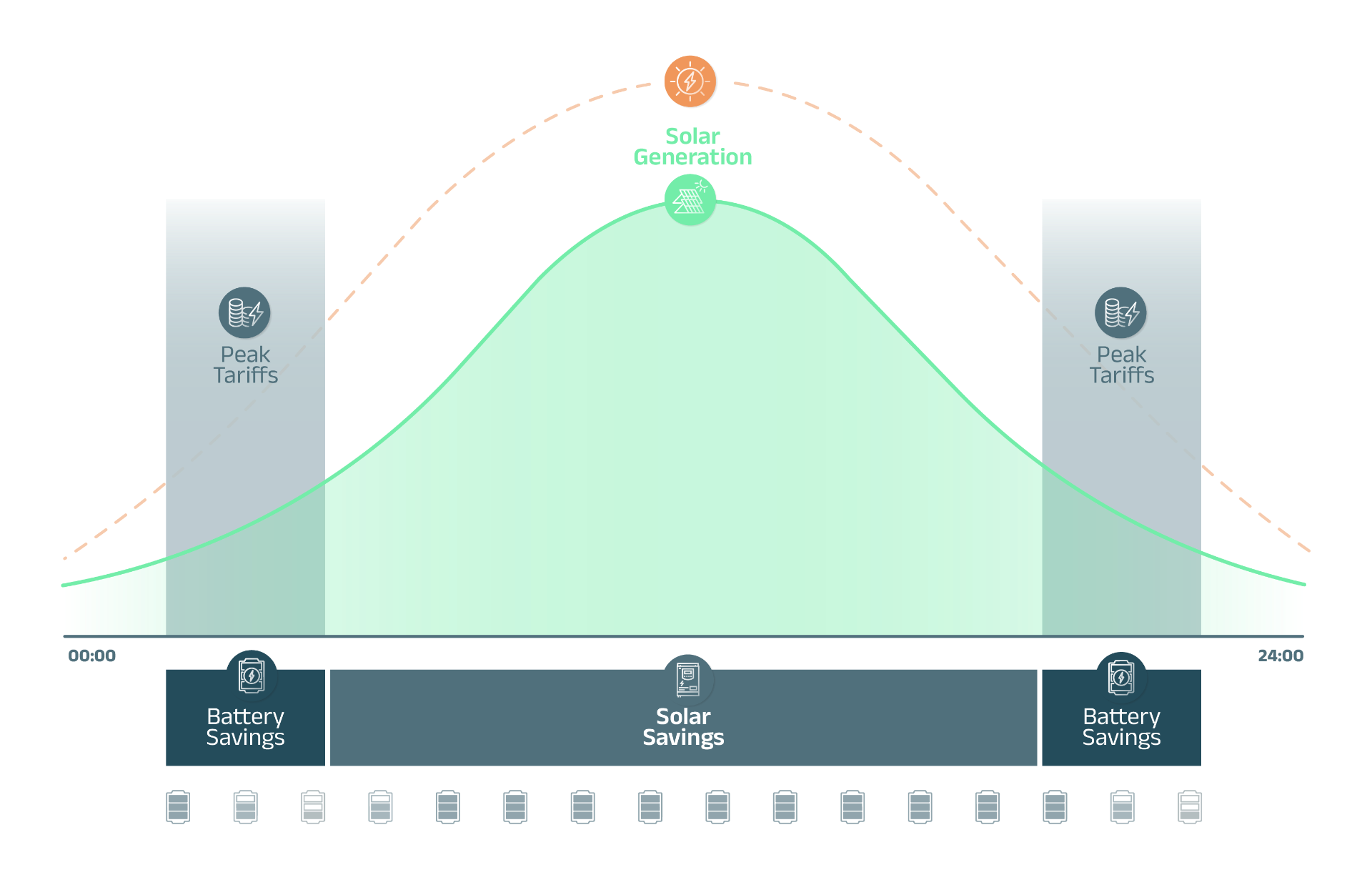
The system charges batteries during off-peak hours or from solar at near-zero marginal cost, then discharges during peak periods when grid electricity costs several times more. This charge-discharge cycle captures the full rate differential every single day the system operates, turning extreme tariff structures into predictable cost savings.
Why Peak Rates Are So Extreme
Ekurhuleni peak electricity tariffs reflect municipal grid constraints and cost-recovery strategies. The metro experiences severe demand peaks during morning and evening periods when residential, commercial, and industrial loads combine. The high peak rates serve to discourage consumption during these stressed periods while recovering infrastructure costs from users who create grid strain.
The result is a tariff structure that creates powerful economic incentives for load shifting. Businesses that can move consumption from peak to off-peak periods through storage or operational changes see immediate, dramatic cost reductions. Those that cannot shift consumption pay premium rates that may exceed what similar operations pay in other regions.
Standard Period and Seasonal Strategy
GridSolar Boost systems in Ekurhuleni often use two-stage discharge strategies. The first discharge targets the morning peak from 6am to 9am. Batteries recharge from solar during midday or from the grid during off-peak. The second discharge covers afternoon standard periods and the evening peak from 5pm to 8pm. This cycling pattern captures both peak and standard arbitrage throughout the working day.
Low-demand season changes the economics. Peak rates drop to R3.78 per kWh, reducing peak arbitrage to R1.91 per kWh. Many systems adjust to peak-only discharge during low-demand season, conserving battery cycles for the highest-value arbitrage opportunities.
The Solar Integration Multiplier Effect
Ekurhuleni's tariff structure makes solar and battery storage dramatically more valuable than solar alone. Without storage, rooftop solar offsets standard-rate consumption during the day. With GridSolar Boost storing that solar generation for evening peak discharge, the same solar energy offsets significantly higher peak rates.
For businesses considering solar in Ekurhuleni, installing GridSolar Boost simultaneously is not an upgrade. It is the difference between acceptable returns and exceptional returns from the same rooftop space. The storage investment pays for itself through the arbitrage multiplier effect on existing solar generation.
The Competitive Implication
Businesses operating in Ekurhuleni without GridSolar Boost face structural cost disadvantages against competitors who have implemented storage. Two similar manufacturers with identical consumption patterns can have monthly electricity costs differing by R150,000 to R200,000 purely based on whether they have installed GridSolar Boost. After three years, that is R5.4 million in accumulated competitive advantage.
Forest Energy has extensive experience with Ekurhuleni installations where the tariff structure demands aggressive arbitrage strategies. We design systems specifically for the extreme rate differentials in this metro, maximising peak offset and capturing every available rand of savings. Contact us for an Ekurhuleni-specific analysis of your electricity consumption and peak exposure.