South Africa's energy landscape is undergoing its most significant transformation in decades. Policy reforms, regulatory changes, and market liberalisation are reshaping how businesses access and manage electricity. For commercial and industrial operations, understanding South Africa's energy transition is essential to making informed energy investment decisions and capturing emerging opportunities.
The Just Energy Transition Framework
South Africa's energy transition is a commitment to moving away from coal-based electricity generation through the Just Energy Transition Partnership established in 2021. While political changes have affected international funding commitments, the national policy direction remains clear. The country plans to decommission multiple coal power plants by 2035 while expanding renewable energy capacity.
The transition creates both challenges and opportunities for businesses. Grid reliability concerns persist as ageing coal plants retire before sufficient replacement capacity comes online. However, policy reforms are simultaneously removing barriers to private-sector energy investment and creating pathways for businesses to secure their own energy supply outside traditional dependence on Eskom.
This transition is not happening in isolation. South Africa's energy security challenges, climate commitments, and economic development goals all intersect in energy policy. Businesses that understand these dynamics can position themselves advantageously, while those waiting for complete certainty will miss opportunities during the transition period.
Embedded Generation: The 100MW License Exemption
One of the most significant regulatory changes for businesses is the raised threshold for generation license requirements. Previously, any generation facility over 1MW required a license from the National Energy Regulator of South Africa. The amended Electricity Regulation Act now exempts facilities up to 100MW from licensing requirements.
The exemption applies to facilities connected to transmission or distribution networks, whether they export surplus generation, wheel electricity to other locations, or operate purely for onsite consumption. This flexibility allows businesses to design systems that match their specific requirements without regulatory constraints that previously limited project sizing.
Electricity Wheeling in South Africa
Updated wheeling regulations approved in 2025 create standardised frameworks for transporting electricity across Eskom's transmission network and municipal distribution systems. Cross-jurisdictional electricity wheeling between Eskom and municipal areas is now explicitly permitted, opening possibilities for businesses to source renewable energy from geographically distant generation sites.
Wheeling allows private generators to sell electricity to willing buyers through existing grid infrastructure. A solar or wind farm in the Northern Cape can supply a manufacturer in Gauteng through wheeling agreements. The framework establishes cost-reflective network charges and non-discriminatory grid access, removing previous barriers to private energy transactions.
However, wheeling contracts include network charges for using transmission and distribution infrastructure. These charges mean wheeled electricity will never be cheaper than onsite generation. The optimal strategy for most businesses combines maximum economically viable onsite generation with wheeling to supplement remaining energy needs.
Time-of-Use Tariff Evolution
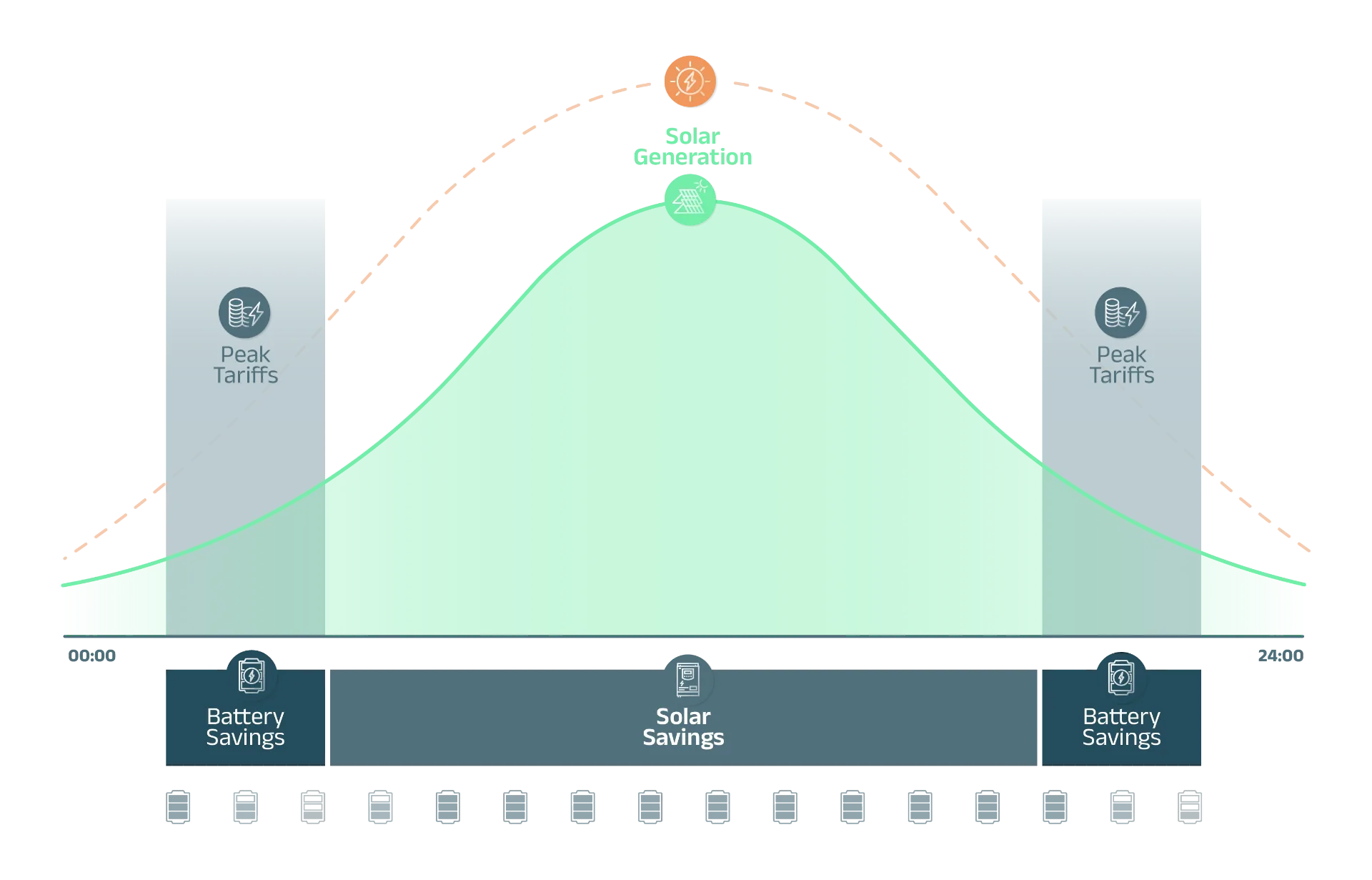
Municipalities and Eskom continue refining time-of-use tariff structures to reflect grid demand patterns and encourage consumption shifting. The trend toward wider spreads between expensive peak rates and cheap off-peak rates is likely to continue as utilities use pricing to manage grid constraints.
For businesses, widening TOU spreads make energy arbitrage through battery storage more financially attractive. Systems that might have marginal returns under flat-rate tariffs deliver strong ROI under aggressive TOU pricing. Municipal tariff structures vary significantly across metros. Ekurhuleni's extreme peak rates create very different economics to Cape Town's more moderate spreads. Businesses operating across multiple municipalities need location-specific energy strategies.
Grid Connection and Infrastructure Constraints
South Africa's transmission and distribution infrastructure faces capacity constraints that affect project timelines. Grid connection applications can face extended approval periods, and some areas have limited capacity for additional embedded generation connections.
Businesses planning significant embedded generation should engage with network operators early in project development. Understanding available grid capacity, connection requirements, and approval timelines prevents costly project delays. In areas with limited grid capacity, onsite consumption systems that do not export to the grid may face faster approval than systems designed for surplus export.
Carbon Pricing and Emissions Reporting
South Africa's carbon tax applies to large emitters and indirectly affects electricity costs as Eskom and other generators pass through carbon costs in tariffs. This pricing creates additional financial incentives for renewable energy adoption beyond direct electricity cost savings.
Corporate sustainability commitments and carbon reporting requirements are driving renewable energy demand from large employers and multinationals. Renewable electricity procurement, whether through onsite generation or wheeling, supports carbon reduction targets and sustainability reporting requirements.
What Businesses Should Do Now
South Africa's energy transition creates immediate opportunities that do not require waiting for future policy clarity. Businesses can assess onsite generation potential, model energy arbitrage opportunities under current tariffs, and evaluate wheeling options for sites with limited onsite capacity.
Energy investment decisions should be based on current economics and near-term payback rather than long-term policy speculation. Systems reaching payback in three to five years under today's conditions provide value regardless of how future regulations develop.
At Forest Energy, we track regulatory developments and help businesses navigate the changing energy landscape. We design systems that comply with current regulations while remaining adaptable to future framework changes. Contact us to discuss how South Africa's energy transition affects your operations and what opportunities exist under today's regulatory framework.