
If you run a commercial or industrial operation in the Vaal, it is worth looking closely at what Emfuleni is charging for electricity in 2026/27. On the Emfuleni Miniflex Time-of-Use (TOU) tariff for low-voltage sites under 1 MVA, the high-demand-season peak energy charge is R12.44 per kWh, excluding VAT. That is not a typo. During winter peak hours, every unit of electricity your site pulls from the grid costs more than twelve rand before VAT is even added.
The number in context
The headline rate only tells part of the story. What matters commercially is the spread between peak and off-peak, because that spread is what a battery can exploit.
| Period (high-demand season) | Rate (R/kWh ex VAT) |
|---|---|
| Peak | 12.44 |
| Standard | 3.60 |
| Off-peak | 1.69 |
The winter peak rate is roughly seven times the off-peak rate and about three and a half times the standard rate. Few tariffs in the country show a spread this aggressive. For a Vaal business with energy-intensive operations, drawing power during those winter peak windows is the single most expensive thing it can do.
Why this is an arbitrage opportunity, not just a cost
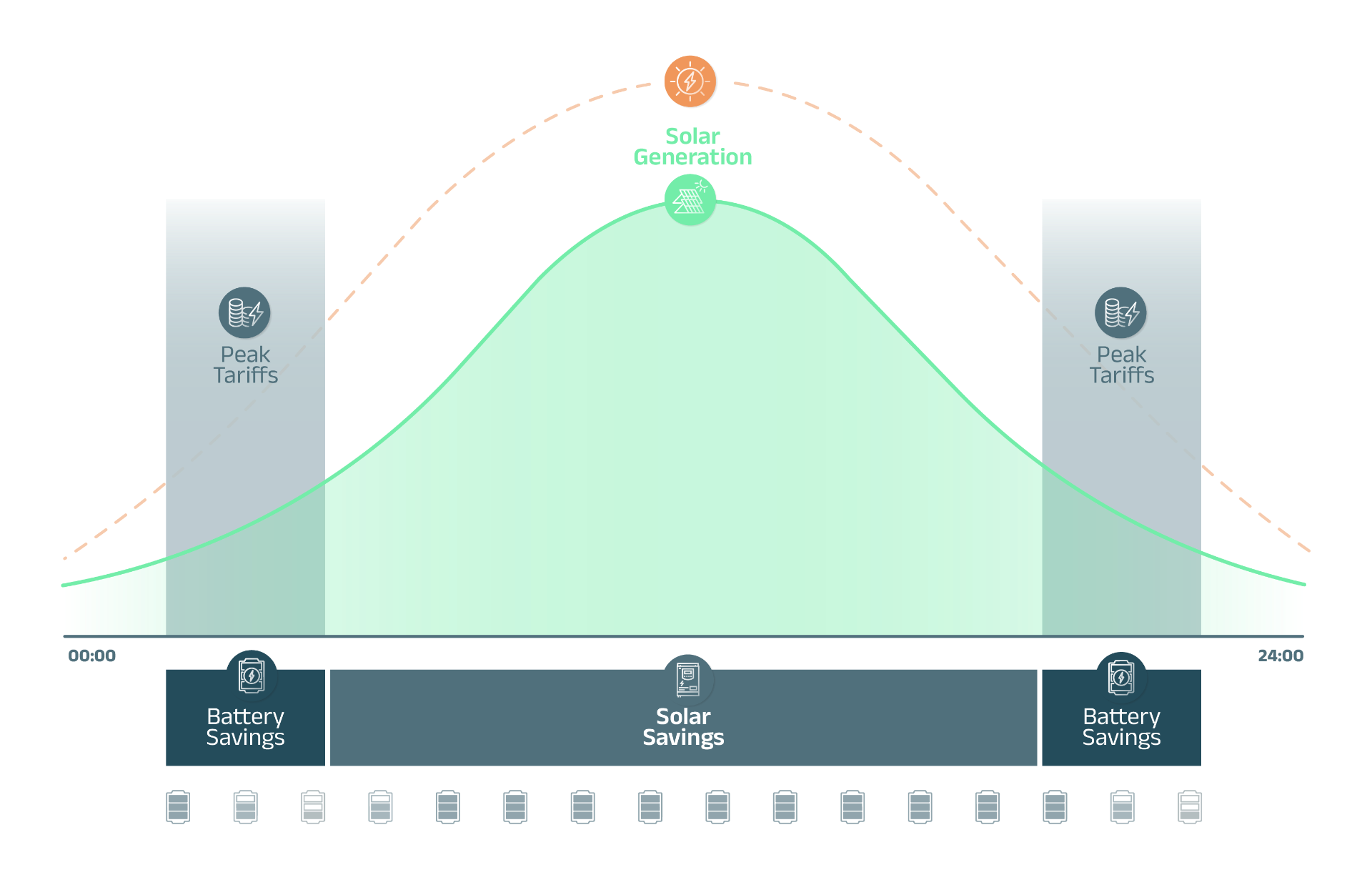
A spread this wide is exactly the condition that energy arbitrage is built for. A Battery Energy Storage System (BESS) charges when electricity is cheap, during off-peak periods at around R1.69 per kWh, and discharges during the peak windows when the grid would otherwise cost R12.44. Every unit shifted this way saves close to the full difference between the two rates.
Solar plays its part too, offsetting daytime consumption, but on a tariff like this the battery is where the outsized value sits. The GridSolarBoost approach, solar combined with a battery configured for arbitrage, is designed precisely for sites facing steep TOU peaks.
The demand charge sits on top
The R12.44 energy rate is only one line on the bill. Emfuleni C&I sites also carry a demand charge based on peak kVA. A battery that discharges during peak windows reduces both the energy drawn at the expensive rate and the measured demand that sets the demand charge. One asset, two savings, every winter month.
What Vaal businesses should do now
Pull your most recent Emfuleni bill and check three things:
- Confirm you are on the Miniflex TOU tariff and note how much of your consumption falls in the winter peak window.
- Find your peak-to-off-peak rate ratio. On this tariff it is close to seven, which means the arbitrage maths is strongly in your favour.
- Note your kVA demand charge, because that is a second saving a battery can unlock.
With a spread this wide, the question for most Vaal C&I sites is no longer whether solar and storage pay, but how quickly. Forest Energy models the business case directly from your metered consumption and Emfuleni's published rates, so the payback and rand saving reflect your actual site.


