
Time-of-use (TOU) tariffs are the foundation of energy arbitrage. Without rate variation between different hours of the day, there's no arbitrage opportunity. South African electricity tariffs have evolved to reflect actual grid demand patterns, creating clear price signals that reward strategic energy use.
How TOU Tariffs Work
Time-of-use tariffs divide the day into distinct pricing periods based on grid demand. When demand is high, rates increase. When demand is low, rates drop. Eskom Miniflex is one of the most common commercial tariffs in South Africa. The rate structure varies between high-demand and low-demand seasons. Each season defines three tariff periods: peak, standard, and off-peak.
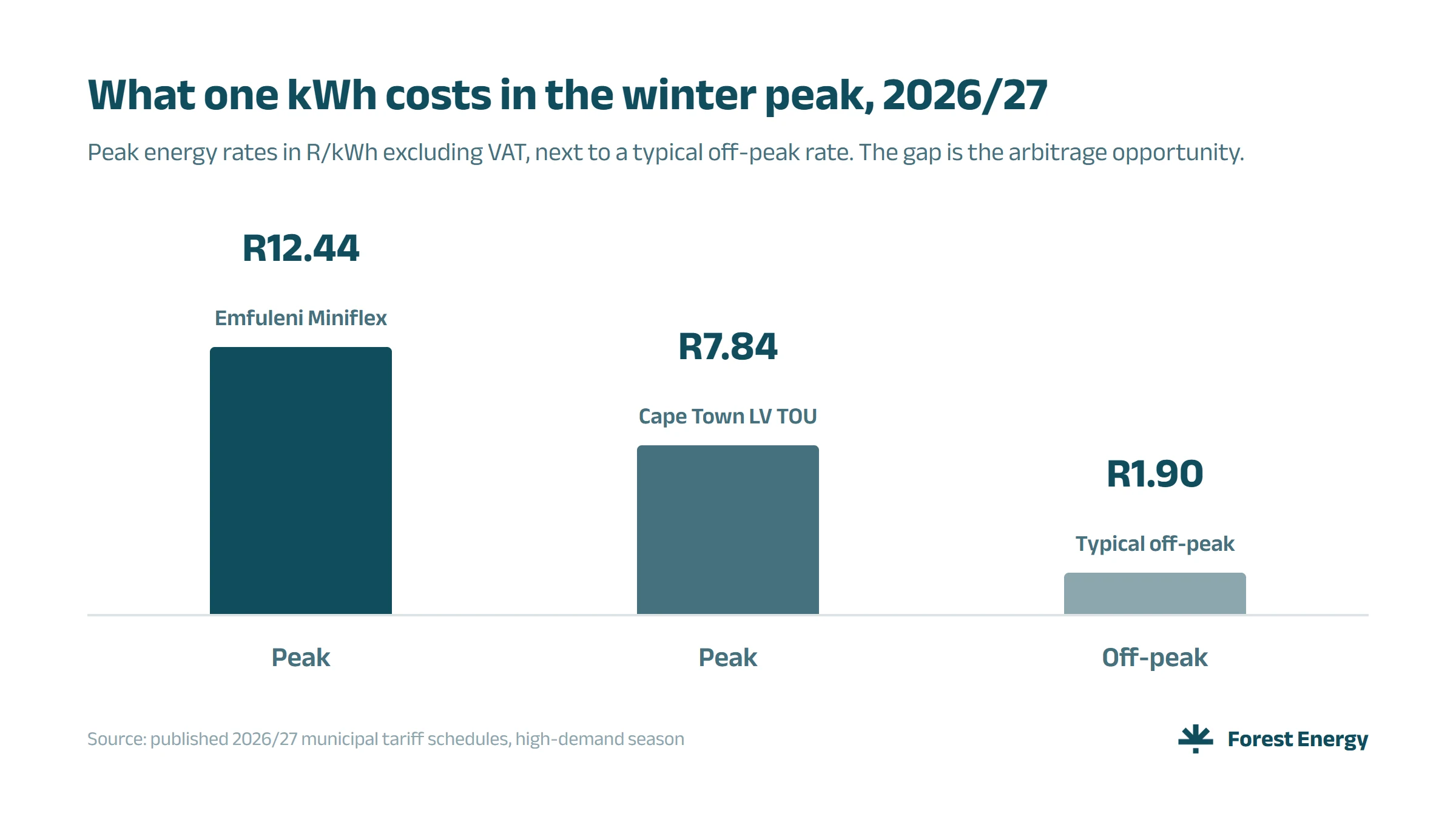
During high-demand season, peak rates reach R7.05 per kWh. Standard rates drop to R1.76 per kWh. Off-peak falls to R1.18 per kWh. Low-demand season reduces peak rates to R2.33 per kWh. These rate differentials create the arbitrage opportunity that GridSolar Boost exploits.
Peak Period Timing
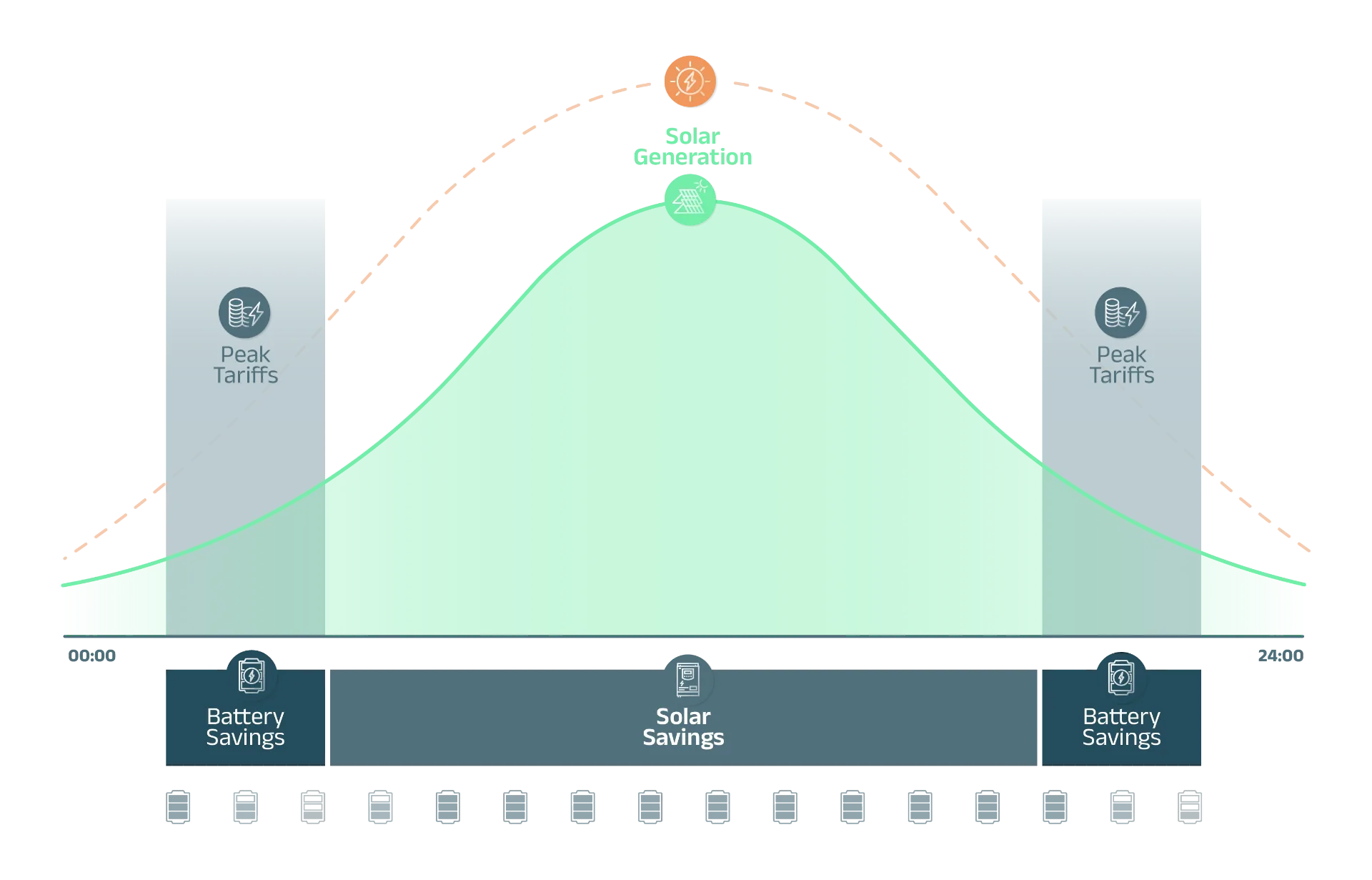
During high-demand season, peak periods run from 6 am to 9 am and 5 pm to 8 pm on weekdays. Standard periods fill the shoulder hours. Off-peak covers nights, early mornings, and entire weekends. Grid demand during off-peak is minimal, allowing utilities to price electricity at marginal cost.
Identifying Your High-Cost Windows
GridSolar Boost optimisation starts with identifying which tariff periods contain your highest consumption. Pull your electricity bills for the past 12 months and look at consumption by tariff period. Many businesses discover that 30% to 40% of their consumption occurs during peak periods but represents 60% to 70% of their total electricity cost.
Seasonal Variation Strategy
High-demand season delivers the strongest arbitrage spreads. The R5.87 per kWh spread between peak and off-peak justifies aggressive peak offset. Low-demand season changes the math — many GridSolar Boost systems adjust their discharge windows seasonally, focusing exclusively on peak periods during low-demand season.
Load Profile and Tariff Alignment
The best GridSolar Boost performance comes from load profiles that naturally align with expensive tariff periods. Manufacturing operations running production shifts from 6 am to 6 pm consume heavily during peak and standard periods. If your operations run primarily during off-peak periods, arbitrage delivers limited value.
Finding Your Optimal Windows
At Forest Energy, we analyse your historical consumption data against your tariff structure to identify the highest-value discharge windows. This analysis determines optimal system sizing and creates a discharge strategy that maximises your arbitrage returns.