
One of the biggest misconceptions about battery energy storage is that you need enough capacity to power your entire facility. This assumption comes from thinking about batteries as backup systems rather than financial tools. For arbitrage, the logic is completely different. You don't need to cover your full load. You only need to offset the expensive hours.
The Arbitrage Sizing Principle
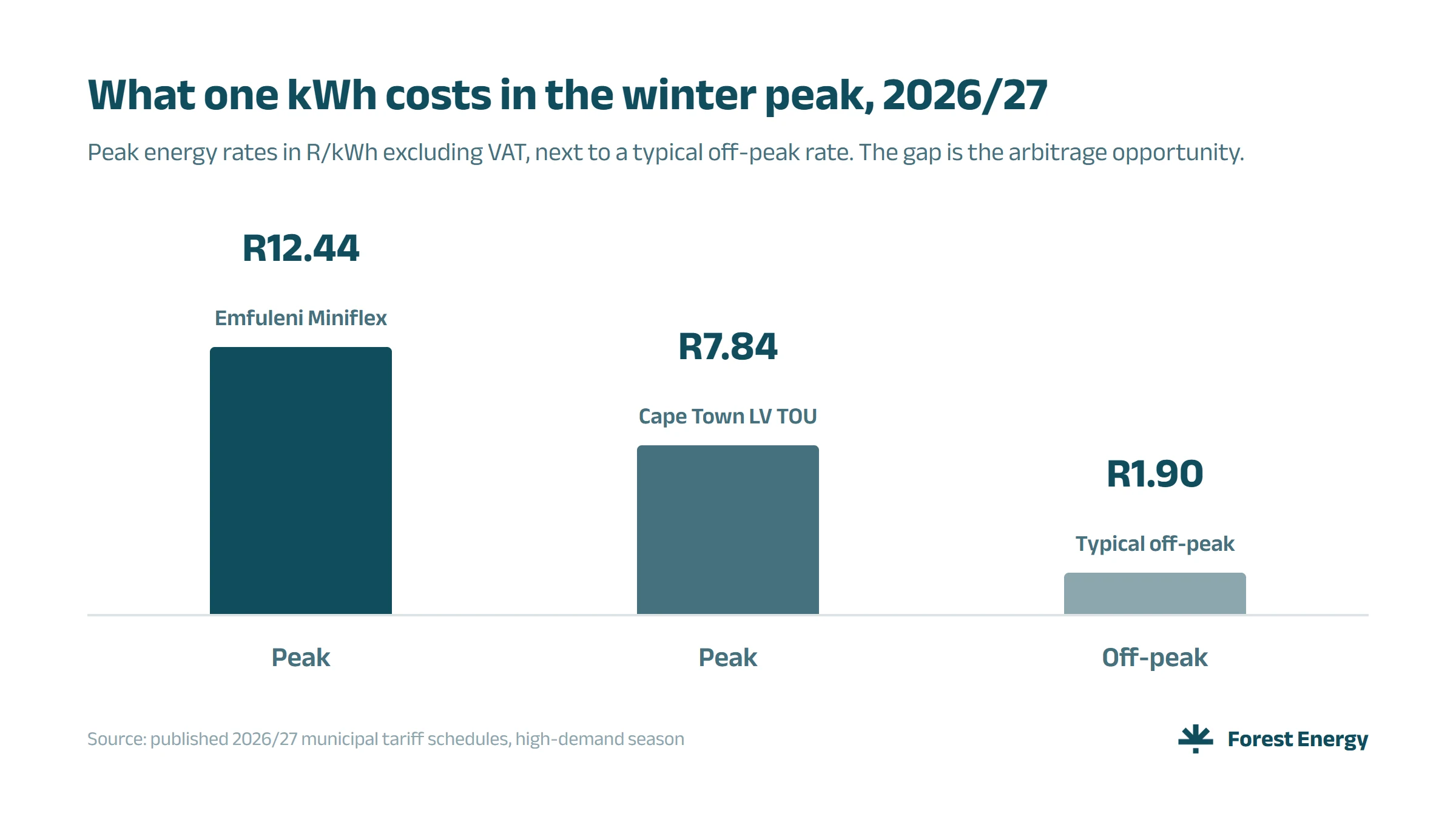
Energy arbitrage works by charging batteries when electricity is cheap and discharging when it's expensive. On Eskom Miniflex during high-demand season, peak periods cost R7.05 per kWh while off-peak drops to R1.18 per kWh — a R5.87 per kWh arbitrage opportunity.
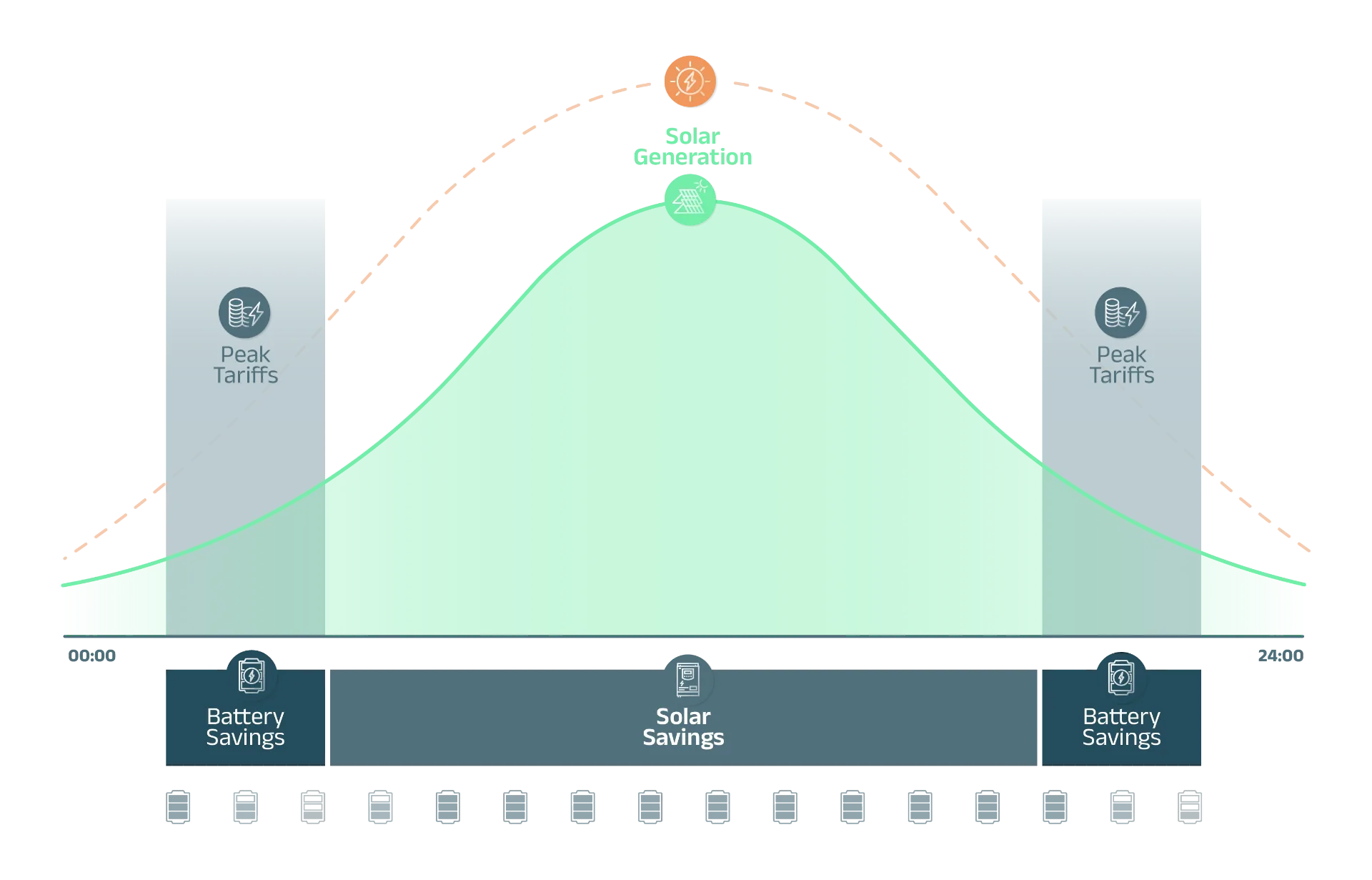
Your battery charges during off-peak periods and discharges during both peak and standard periods to maximise savings.
Understanding Your Load Profile
Effective sizing starts with understanding when and how your business uses electricity. Most businesses find their highest consumption during operating hours falls into peak and standard periods. Once you understand your tariff-period consumption, you can size GridSolar Boost to offset the most expensive portions.
Solar Integration and Charging Strategy
If you have solar PV installed, GridSolar Boost leverages that investment. Solar generation peaks during midday at standard rates. With GridSolar Boost, you store that midday solar generation and discharge it during evening peaks at R7.05 per kWh — multiplying the value of your solar investment by up to four times.
For businesses without solar, GridSolar Boost charges from the grid during off-peak periods. Charging at R1.18 per kWh overnight and discharging to avoid R7.05 per kWh morning peaks still delivers a R5.87 per kWh saving.
Partial Offset Strategy
You don't need to offset 100% of peak consumption to achieve strong returns. Many GridSolar Boost installations target 40% to 70% offset based on capital availability.
Consider a business with 800 kWh of combined peak consumption daily. At R7.05 per kWh, that's R5,640 in peak charges per day. A system sized to offset 400 kWh reduces peak costs by R2,820 daily — approximately R56,400 per month, assuming 20 working days.
The Bottom Line on Sizing
GridSolar Boost sizing breaks free from the full-backup mentality. You're targeting expensive peak and standard periods with precisely sized storage that delivers daily financial returns.