
Most South African businesses assume that battery storage means investing in a full backup system capable of running the entire facility during outages. This misconception stops many from exploring battery energy storage altogether. The reality is different — GridSolar Boost costs substantially less than full backup systems while delivering faster returns and daily cost savings.
Understanding the Cost Difference
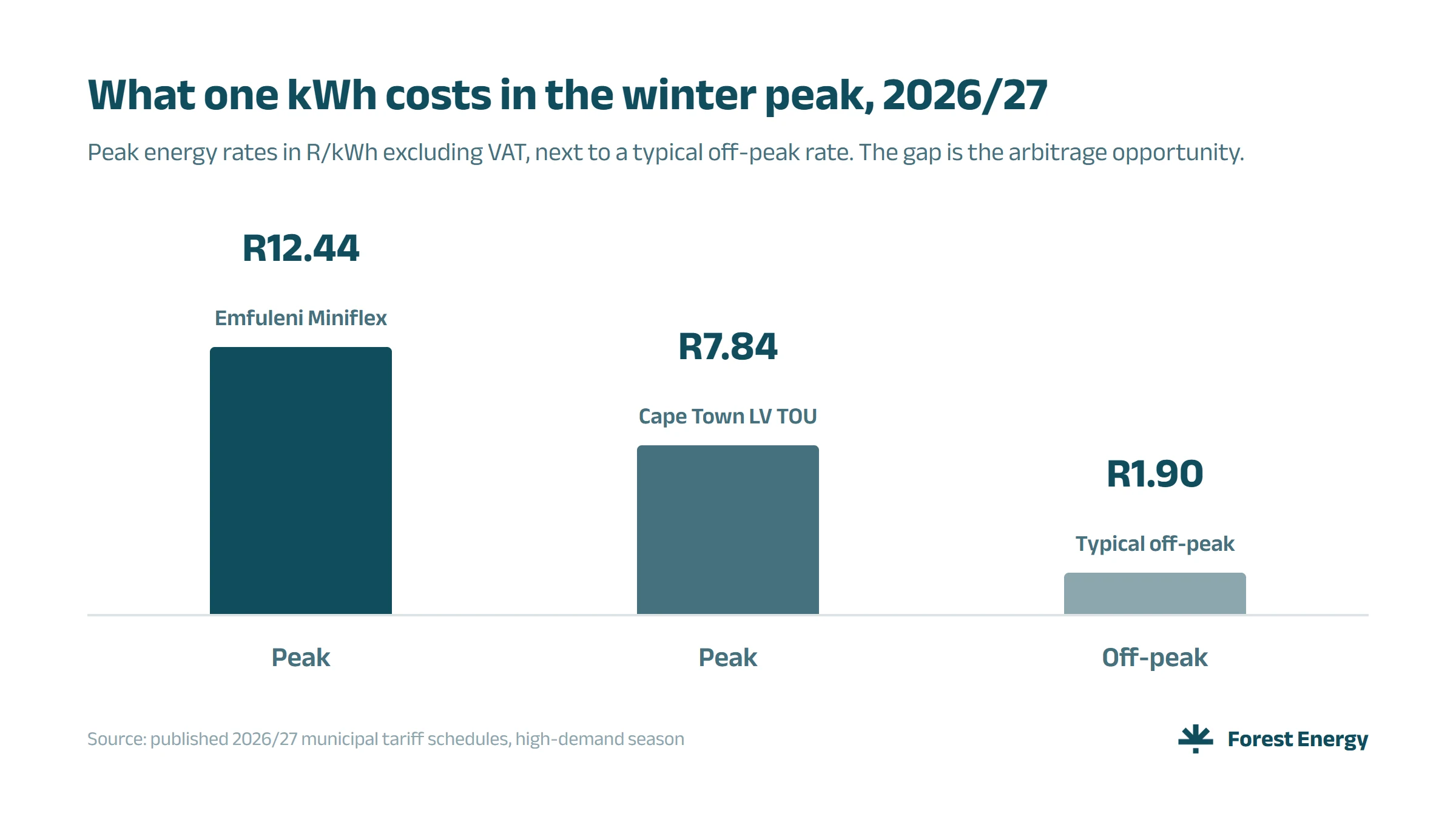
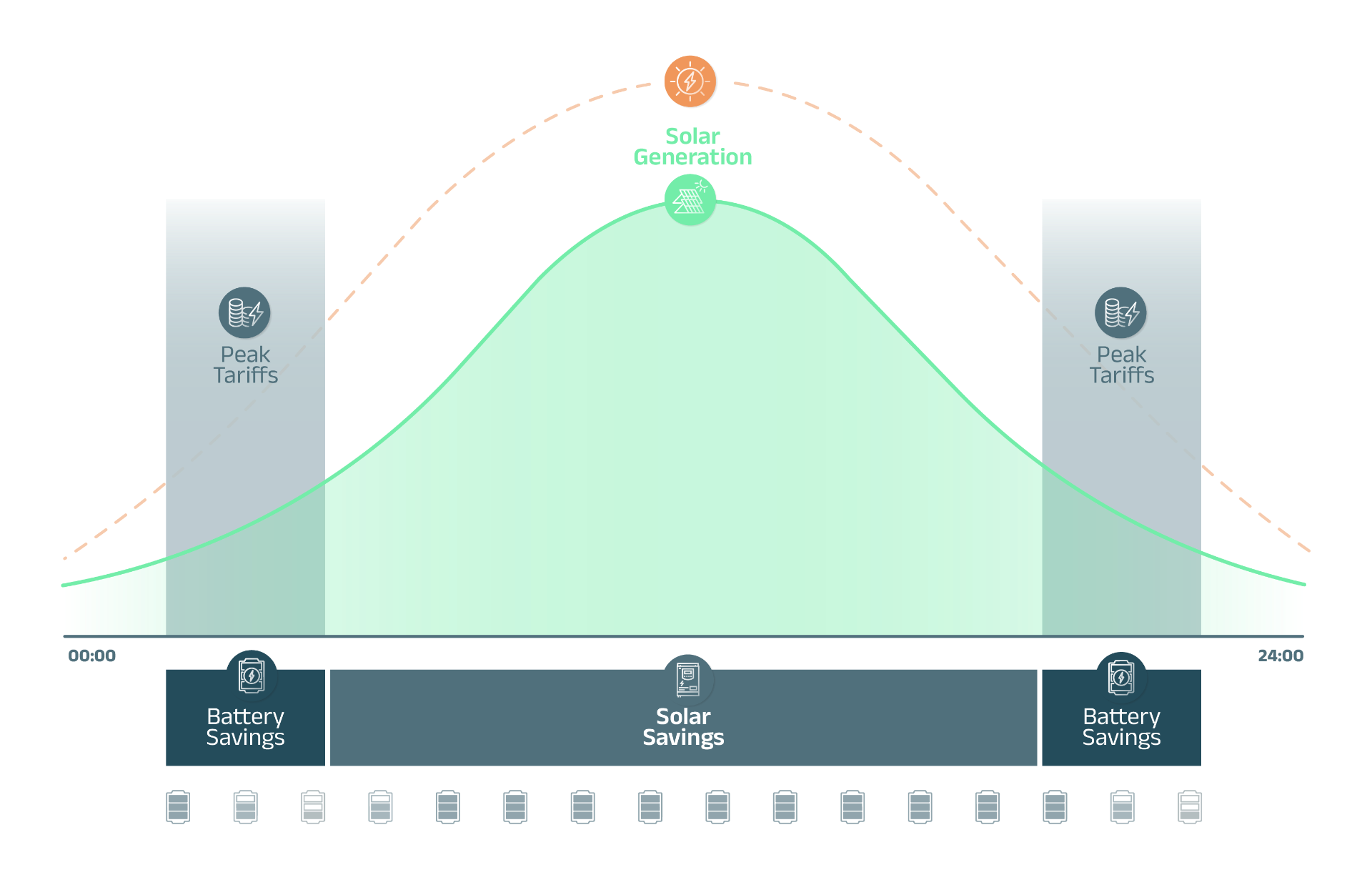
The fundamental difference comes down to purpose. Full backup systems are designed to carry your entire electrical load during grid outages, which means sizing every component for maximum capacity. GridSolar Boost is designed to offset expensive peak-hour electricity consumption, which requires smaller, more cost-effective components.
GridSolar Boost only needs to manage the offset load during peak tariff periods, typically 3 to 4 hours per day. This difference in scope allows for more economical system sizing without compromising performance.
Installation Complexity and Cabling
Full backup systems require complex changeover switching, backup-rated electrical infrastructure, and extensive rewiring. GridSolar Boost integration is simpler — it connects to your existing solar installation and grid connection without complex changeover mechanisms.
Projects that would take weeks for full backup implementation can be completed in days with GridSolar Boost.
Component Cost Comparison
A GridSolar Boost installation includes:
- Smaller inverters sized for peak offset
- Battery storage for 3 to 4 hours of peak consumption
- Standard integration with existing solar
- Basic monitoring and control systems
A full backup system requires:
- Larger inverters to handle full facility load
- More batteries for extended runtime
- Complex changeover switching
- Backup-rated infrastructure
- Advanced control systems for seamless switching
Financial Performance
The lower capital cost of GridSolar Boost creates faster payback. Where full backup systems might take 7 to 10 years to recover, GridSolar Boost typically achieves payback in 2 to 4 years through daily arbitrage savings alone.
The Right Tool for the Job
GridSolar Boost isn't a compromise. It's engineered specifically for cost optimisation through energy arbitrage. For businesses focused on reducing monthly electricity expenses without the capital outlay of full backup, GridSolar Boost delivers the financial performance that makes battery storage viable.