Section 12B is not a once-off incentive. It applies every tax year, and that can create a false sense of time. The deduction falls in the year the system is brought into use, so for any business with a financial year end of 28 February 2027, the system has to be running before that date. Working back from project lead times, the effective deadline to sign is the end of October 2026.
Miss that window and you do not lose the incentive entirely, but you lose a full year of tax benefit in a year where you may have the income to absorb it. For some businesses, that delay costs more than the financing would have.
How the Section 12B deduction actually works
Section 12B of the Income Tax Act allows a business to deduct 100% of the cost of a qualifying renewable energy asset in the year the asset is first brought into use. Brought into use means the system is fully commissioned and generating electricity, not just contracted or installed.
For a business with a 28 February year end, that means the plant needs to be running before the financial year closes. Not signed. Not permitted. Not under construction. Running.
On a system costing R5 million, a 100% deduction in year one reduces taxable income by R5 million. At a 27% corporate tax rate, that is a R1.35 million tax saving in a single year. That saving either improves payback materially or, on financed projects, can be structured to reduce the repayment burden.
Why the end of October 2026 is the last realistic window
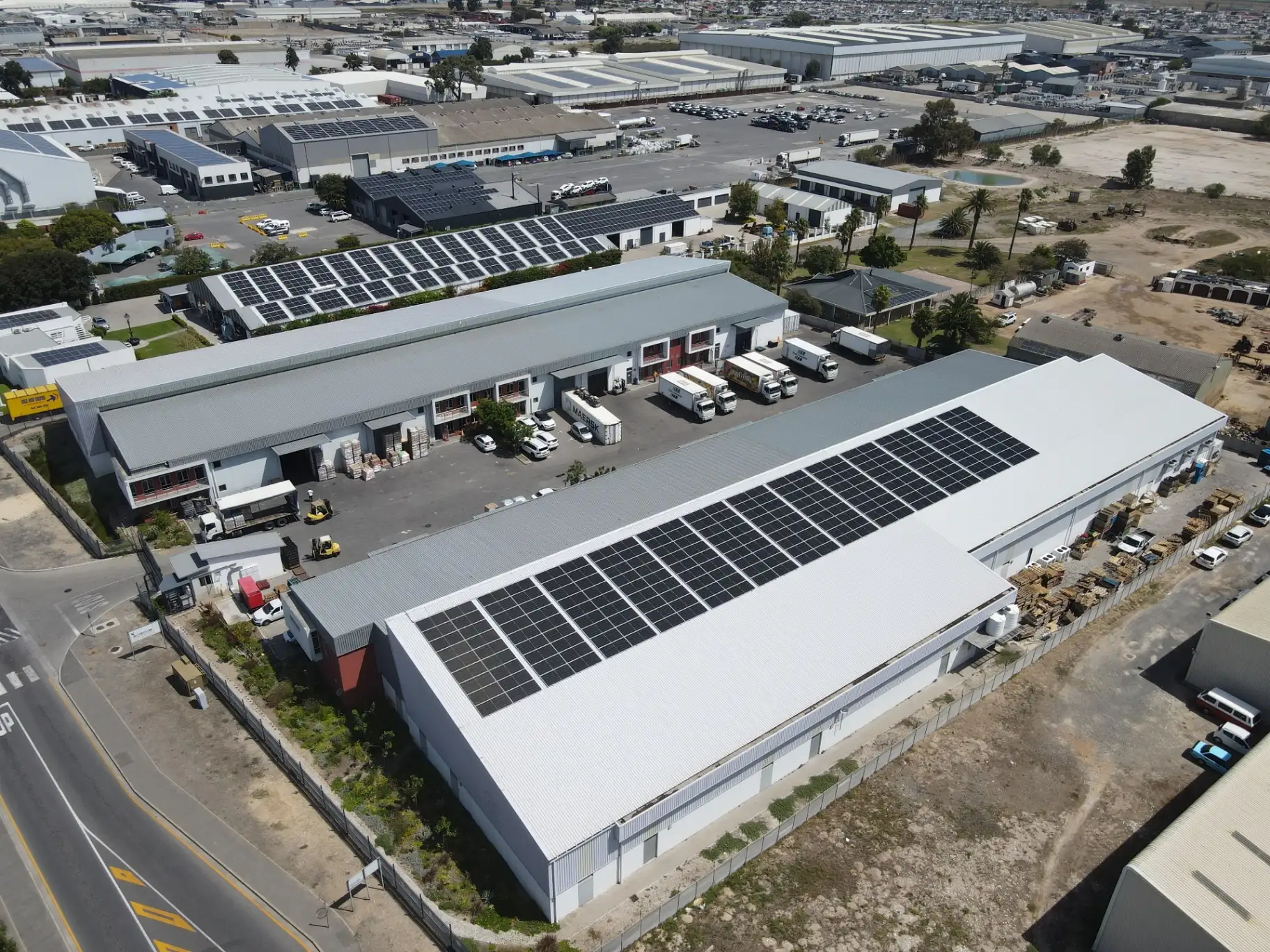
Commercial solar and battery projects take time. From contract signature to commissioning, a straightforward rooftop solar installation typically takes 3 to 4 months. A hybrid solar plus BESS project, or any site with grid application requirements, connection upgrades, or structural complexity, takes 4 to 6 months. Some take longer.
Working backwards from 28 February 2027:
- A project signed by the end of October 2026 has about 4 months to commission, enough for a straightforward rooftop system with little margin
- A project signed in November 2026 would need to commission in around 3 months, which is only possible for the simplest sites
- A project signed in December 2026 or later cannot realistically be commissioned before the February deadline
Signing by the end of October gives a project about four months to run. That is not a comfortable buffer. It is the minimum realistic window for a straightforward commercial rooftop system, and a hybrid solar plus BESS project, which typically takes 4 to 6 months, may already be too tight for FY27. If that is your situation, the deduction is not lost. Section 12B applies again in FY28, as long as the system is running before your next year end.
The PPA argument is separate but equally time-sensitive
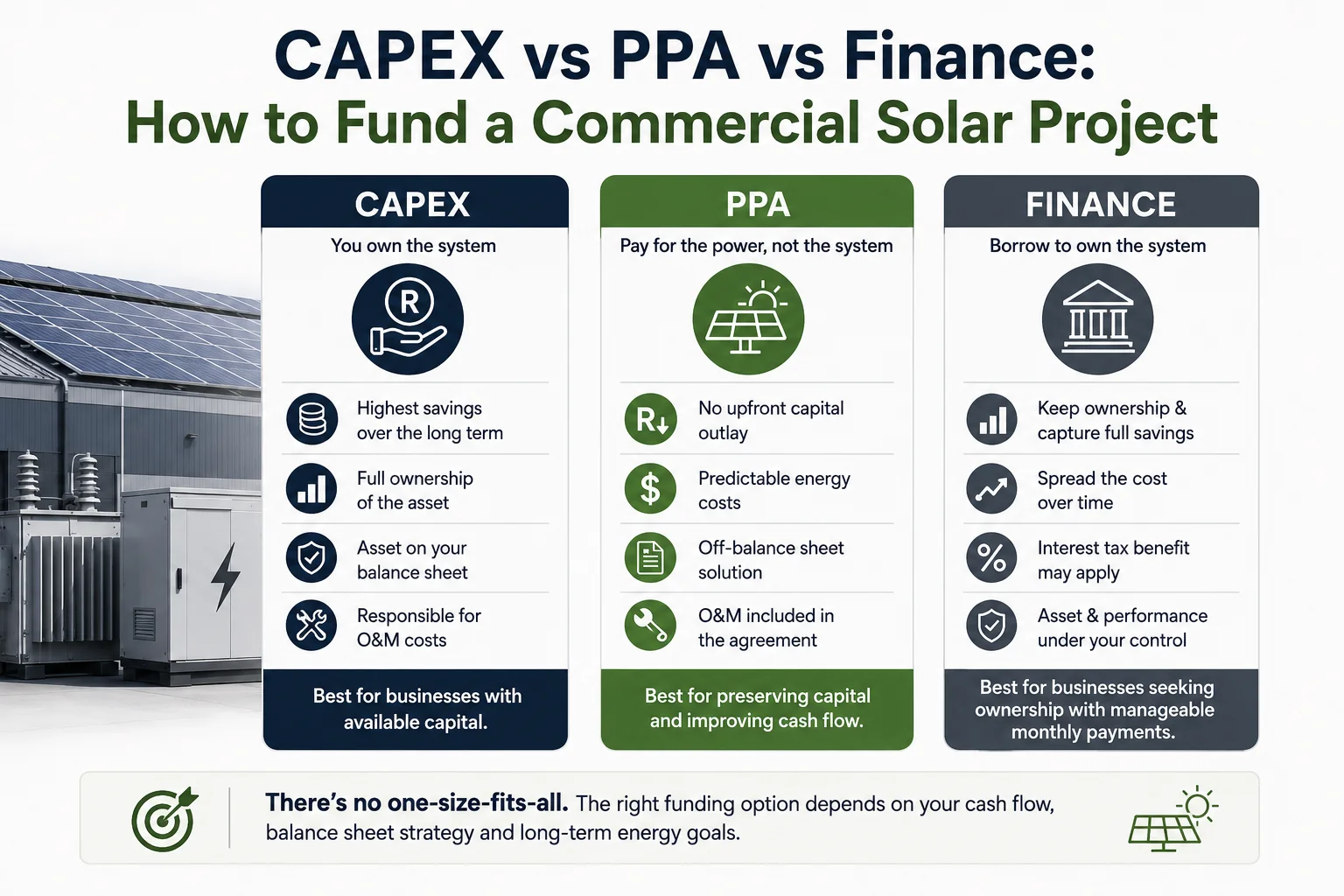
Not every business can deploy capital right now, and not every business needs to. A Power Purchase Agreement (PPA) lets Forest Energy fund, install, and maintain the system, and the client pays only for the electricity generated, at an agreed rate, typically below the current grid tariff.
The Section 12B deduction does not apply to you under a PPA structure, because you do not own the asset. But there is a separate and compelling reason to move now: rate locking.
Every Eskom tariff increase, and every municipal tariff adjustment, makes the renewable rate look more competitive against whatever you signed. Locking in a PPA rate now, before the next increase cycle, sets your baseline at today's tariff environment. Waiting 6 or 12 months means your new contract rate is benchmarked against a higher grid tariff, which narrows the saving.
Both the CAPEX case and the PPA case improve with time. Neither benefits from waiting.
What the tax deduction looks like at different system sizes
| Indicative capital cost | Section 12B deduction (100%) | Tax saving at 27% corporate rate | |
|---|---|---|---|
| System 1 | R 1.8M | R 1.8M | R 486 000 |
| System 2 | R 3.2M | R 3.2M | R 864 000 |
| System 3 | R 5.5M | R 5.5M | R 1 485 000 |
| System 4 | R 8.5M | R 8.5M | R 2 295 000 |
These are illustrative figures based on typical commercial project costs. Actual costs depend on site complexity, equipment specification, grid requirements, and mounting structure. The tax saving is the deduction multiplied by your effective tax rate, which can be modelled precisely once we have your financial year end and taxable income profile.
Qualifying criteria to keep in mind
- The asset must be new and unused, not second-hand or refurbished
- The system must be used in the production of income, not purely domestic or off-grid
- The full system, solar PV, inverters, and BESS if included, must be commissioned before your financial year end
- SARS may request commissioning documentation, so a professional sign-off is essential
SARS has been clear that commissioning date is the determining factor. A system that is not commissioned and producing on 28 February 2027 does not qualify for the February 2027 year-end deduction. This is why the timeline is not a preference, it is a hard requirement.
What to do right now
If your financial year ends in February 2027 and you have been considering a solar or BESS project, the decision window is closing. The first step is a site assessment and financial model, not a commitment. That process takes a few days and tells you exactly what the system would cost, what it saves, what the tax impact looks like, and whether your site can be commissioned before the deadline.
If the answer is yes, the next step is moving quickly. Engineering, procurement, and installation all have lead times, and the earlier the contract is in place, the more delivery margin we have.
Contact Forest Energy before the end of October. We will give you an honest assessment of whether February 2027 is achievable for your site, what it would take to get there, and what the business case looks like. No obligation. Just clarity.